
Business hotels are a defining part of Japan’s hospitality landscape. While often overlooked by international travelers in favor of luxury resorts or traditional ryokan, business hotels play a critical role in how people move, work, and rest across the country. Their development reflects broader changes in Japanese society, work culture, and travel habits.
Understanding business hotels means understanding how Japan approaches efficiency, comfort, and consistency.
Origins of the Business Hotel Concept
The concept of the business hotel in Japan began to take shape during the post-war economic growth period. As cities expanded and corporate travel increased, there was a growing need for accommodations that were affordable, reliable, and located near transportation hubs.
Unlike luxury hotels, business hotels were not designed to impress. Their purpose was practical: provide a clean, quiet place to sleep, shower, and prepare for the next day. This focus on function over form became their defining feature.
Early business hotels prioritized:
- Proximity to train stations
- Simple room layouts
- Predictable pricing
- Efficient check-in and check-out
These priorities aligned closely with the needs of Japan’s growing workforce.
Standardization as a Strength
One of the most notable characteristics of Japanese business hotels is standardization. Rooms are often similar in size and layout, regardless of location. Amenities are consistent, and services follow clear procedures.
Rather than limiting choice, this consistency builds trust. Guests know what to expect before they arrive. There are no surprises, and no need to adjust to unfamiliar systems.
From a hospitality perspective, this reliability is a form of comfort. Travelers can focus on their purpose—whether work or leisure—without worrying about accommodation details.
Design Focused on Use
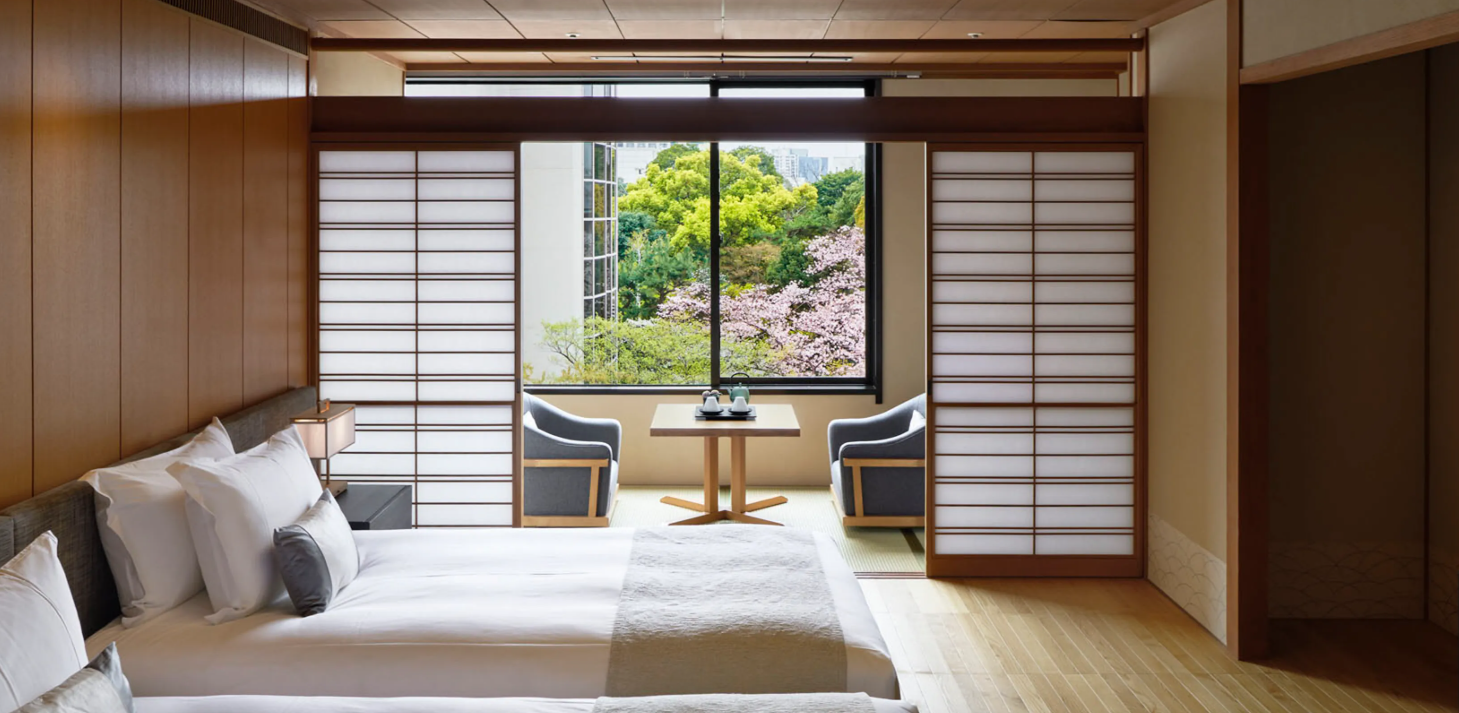
Business hotel rooms are compact by design, especially in urban areas. However, every element is carefully considered. Beds are positioned to maximize space, desks are functional, and lighting is designed to support both work and rest.
This approach reflects a broader Japanese design philosophy: remove excess, keep what matters.
Despite their size, rooms often feel organized rather than cramped. Storage solutions, modular furniture, and intuitive layouts allow guests to use the space efficiently.
Beyond Business Travelers
Although originally created for corporate use, business hotels now serve a much wider audience. Solo travelers, students, domestic tourists, and even international visitors increasingly choose business hotels for their value and convenience.
Several factors contribute to this shift:
- Rising travel costs
- Increased solo travel
- Preference for central locations
- Desire for privacy and predictability
For many travelers, business hotels offer exactly what they need—and nothing they do not.
Service Culture and Quiet Efficiency
Service in business hotels reflects Japanese hospitality values in a subtle way. Staff members are polite, attentive, and efficient, but rarely intrusive. Interactions are brief, clear, and respectful of time.
This quiet efficiency aligns with the expectations of guests who value autonomy. Assistance is available, but never forced.
From an EEAT standpoint, this model demonstrates experience-driven service design. Practices are refined over decades of real-world use, not trends or marketing claims.
The Role of Technology
Business hotels in Japan have also been early adopters of practical technology. Automated check-in kiosks, key card systems, and streamlined payment processes reduce friction and waiting time.
Importantly, technology is used to support convenience rather than replace human presence entirely. Staff remain available when needed, maintaining balance between automation and service.
This pragmatic use of technology reinforces trust and usability.
Business Hotels in Modern Travel
As travel styles evolve, business hotels remain relevant because they adapt without abandoning their core purpose. Some have introduced upgraded bedding, improved soundproofing, or flexible spaces, while keeping prices accessible.
They continue to serve as a backbone of Japan’s travel infrastructure—quietly supporting millions of stays each year.
For editorial discussions around hospitality and lifestyle, business hotels offer a clear example of how design, culture, and experience intersect.
A Lasting Presence
Business hotels may not offer spectacle, but they offer stability. Their success lies in meeting essential needs consistently, day after day.
In a world where travel is often framed around novelty, business hotels remind us that comfort can be routine—and that routine, when done well, is valuable.
Their continued relevance highlights an important lesson in hospitality: understanding how people actually live and travel matters more than following trends.